
7 Best Open-Source AI Agents to Boost Workflow Speed (2026)
If you’ve spent any time tracking web speed or wrestling with core web vitals, you know that performance bottlenecks aren’t always limited to bloated JavaScript bundles or high TTFB. Frequently, the biggest bottleneck in any modern digital operation is human friction—the hours spent copying data between platforms, organizing media libraries, managing software dependencies, or triaging endless admin tasks.
For years, proprietary SaaS tools promised to eliminate this manual drag. However, closed ecosystem tools come with severe limitations: skyrocketing per-token API costs, restrictive rate limits, and zero control over your data privacy.
That paradigm has shifted dramatically. The developer community has moved aggressively toward open-source, autonomous AI agents.
Instead of simple LLM wrappers that merely generate text, modern open-source agent frameworks execute code in isolated sandboxes, navigate complex web applications autonomously, manage persistent memory, and connect natively to local databases.
If you are looking to automate daily workflows while retaining absolute ownership of your infrastructure and data, here are the 7 most powerful open-source AI agent frameworks leading the industry today.
+———————————–+
| User Prompt / Task Goal |
+———————————–+
|
v
+———————————–+
| Agent Core (LLM & Memory State) |
+———————————–+
|
+———————–+———————–+
| | |
v v v
+——————+ +——————-+ +——————+
| Tool Execution | | Browser Control | | Sandbox Execution|
| (APIs / SQL) | | (DOM Navigation) | | (Code Runtime) |
+——————+ +——————-+ +——————+
| | |
+———————–+———————–+
|
v
+———————————–+
| Final Output & Task Resolution |
+———————————–+
1. OpenClaw: The Local-First Automation Engine
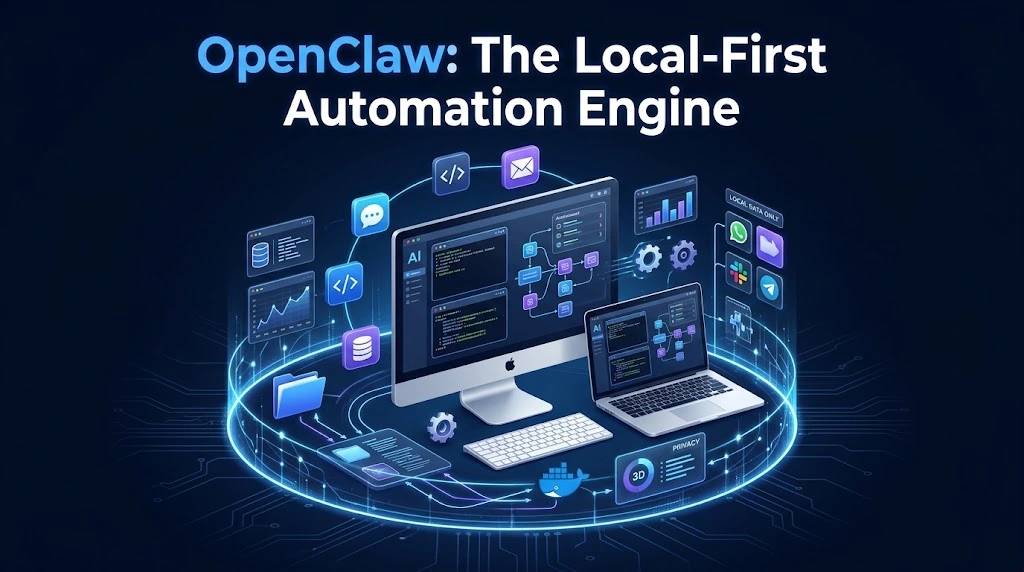
Best For: Self-hosted messaging, local tool automation, and absolute data privacy.
When it comes to breakout open-source projects, OpenClaw has set a new benchmark for community growth. Built on a local-first architecture, OpenClaw operates as an always-on personal assistant layer across local environments and messaging channels.
┌────────────────────────────────────────────────────────┐
│ OpenClaw Architecture │
├───────────────┬──────────────────────┬─────────────────┤
│ Messaging Hub │ Tool Integration │ Execution │
├───────────────┼──────────────────────┼─────────────────┤
│ WhatsApp │ Local Database / SQL │ Ollama / Llama │
│ Telegram │ Internal Webhooks │ Local Sandboxes │
│ Slack │ REST APIs │ Docker Containers│
└───────────────┴──────────────────────┴─────────────────┘
Key Technical Capabilities:
- Native Tool Routing: Features dozens of pre-built integrations connecting directly to local filesystems, CRMs, and messaging systems like WhatsApp, Slack, and Telegram.
- Zero External Data Leakage: Runs entirely within your own self-hosted infrastructure or local Docker container.
- LLM Agnostic: Pairs smoothly with cloud APIs or local models via Ollama and vLLM.
By decoupling automation logic from third-party vendor platforms, OpenClaw gives developers complete control over how data moves through their internal stack.
Read our complete guide on optimizing local server resources for high-concurrency background tasks.
2. Browser-Use: Web Automation Beyond API Limits
Best For: Web scraping, form-filling, and complex browser interactions without APIs.
A significant portion of web workflows occurs on platforms that do not offer public REST APIs or structured export tools. Browser-Use bridges this gap by granting AI agents direct control over a web browser.
[Agent Intent] ──> [Browser-Use Core] ──> [Playwright / Chrome Vision]
│
▼
[Live Web DOM Action]
(Click, Type, Extract)
Instead of relying on brittle DOM selectors that break whenever a layout updates, Browser-Use combines vision models with tree-parsing logic. The agent visually inspects the webpage, identifies target elements, and executes complex sequences—such as filling multi-step forms, bypassing legacy authentication gates, or extracting unstructured data.
Primary Workflow Use Cases:
- Executing recurring administrative routines across legacy web portals.
- Automated cross-browser QA testing and visual regression verification.
- E-commerce inventory monitoring and automated competitor analysis.
3. OpenHands: Autonomous Software Engineering
Best For: Local codebase refactoring, terminal execution, and software development tasks.
For developers seeking an open-source alternative to proprietary AI software engineers like Devin, OpenHands is the top-tier project.
┌────────────────────────────────────────────────────────┐
│ OpenHands Engine │
├────────────────────────────────────────────────────────┤
│ 1. Inspect Repository & Read Source Code │
│ 2. Generate Implementation Plan │
│ 3. Run Execution Code in Isolated Terminal Sandbox │
│ 4. Self-Correct Based on Compiler & Test Errors │
└────────────────────────────────────────────────────────┘
OpenHands operates inside an isolated runtime sandbox. You supply a natural language goal—such as fixing a bug, updating dependencies, or writing test suites—and OpenHands actively reads files, executes shell commands, inspects logs, and refines its own output until the problem is solved.
- SWE-Bench Proven: Consistently achieves top-tier scores on open coding benchmarks.
- Sandbox Execution: Executes shell commands safely inside Docker containers, protecting your primary system state.
4. CrewAI: Multi-Agent Role-Based Orchestration
Best For: Complex, multi-stage workflows requiring specialized team roles.
Single-agent prompts often break down when tasked with executing large, multi-step operations. CrewAI addresses this by using a role-based, multi-agent architecture.
+—————————————————————+
| CrewAI Execution Flow |
+—————————————————————+
| [Researcher Agent] ──> Passes Draft Data ──> [Writer Agent] |
| │ |
| [Publisher Agent] <── Passes Clean Output <───────┘ |
+—————————————————————+
Instead of asking one LLM to perform research, write copy, format Markdown, and commit to a repository, CrewAI lets you define a team of specialized agents:
- Researcher Agent: Scrapes web pages and compiles structured facts.
- Editor Agent: Synthesizes raw findings into structured content.
- Publisher Agent: Formats output and pushes data directly through an API.
By assigning distinct roles, tools, and guardrails to each micro-agent, multi-agent pipelines reduce halluncinations and deliver predictable outputs.
5. LangGraph: Stateful Multi-Agent Runtimes
Best For: Production-grade, cyclic agent workflows with precise state management.
While basic agent scripts execute simple linear chains, real-world business logic requires loops, conditionals, human-in-the-loop approvals, and robust state persistence. LangGraph (developed by the LangChain team) provides the underlying engine for building cyclic, stateful workflows.
┌────────────────────────┐
▼ │
[State Definition] ──> [Node Execution]
│ │
├──(Validation Passed)───┼──> [Final State]
│ │
└──(Requires Revision)───┘
Why Developers Build on LangGraph:
- Cyclic Graphs: Unlike traditional Directed Acyclic Graphs (DAGs), LangGraph supports loops, enabling agents to self-correct until validation checks pass.
- Built-in Persistence: Saves conversational and task state at every step, allowing workflows to pause, wait for human review, and resume seamlessly.
6. AutoGPT: The Visual Agent Platform
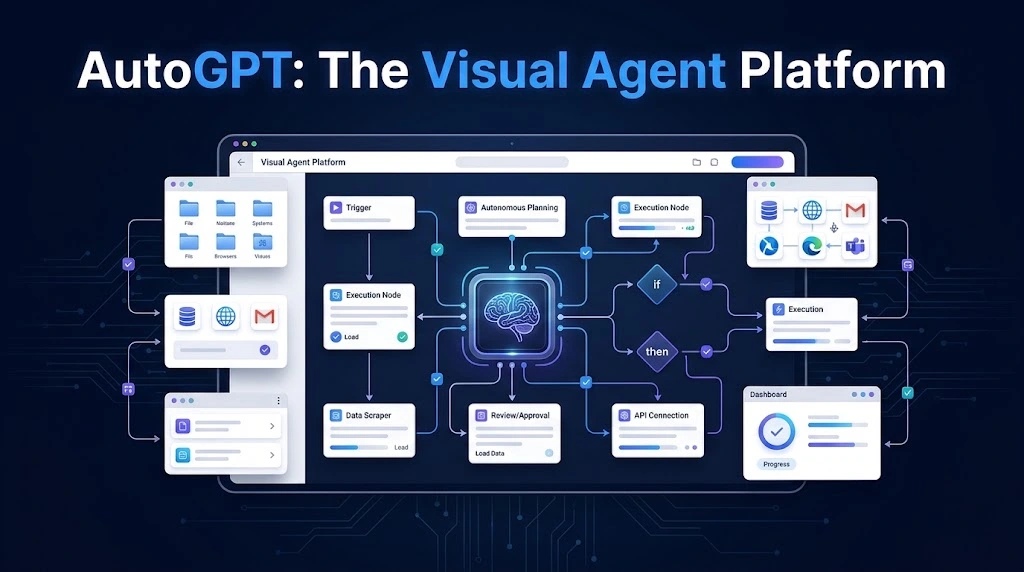
Best For: Visual workflow design, continuous tasks, and no-code/low-code agent orchestration.
As one of the pioneering projects in autonomous execution, AutoGPT has evolved into a comprehensive platform for designing, deploying, and monitoring autonomous routines.
+—————————————————————+
| AutoGPT Ecosystem |
+—————————————————————+
| [Visual Builder] ──> [Trigger System] ──> [Execution Engine] |
+—————————————————————+
AutoGPT features an intuitive graphical workflow builder alongside its CLI engine. This allows teams to construct multi-step triggers, assign external tools, and monitor agent behavior without re-architecting underlying pipeline code.
Explore official technical documentation and source repositories on GitHub.
7. smolagents: Zero-Bloat Code-First Agents
Best For: Lightweight Python-native scripts, local LLM execution, and rapid prototyping.
Framework bloat is a growing challenge in the AI ecosystem. Many libraries enforce strict DSLs, complex JSON schema specifications, and heavy abstraction layers. smolagents, maintained by Hugging Face, takes an intentionally minimal approach.
[Raw Task Input] ──> [smolagents Core] ──> [Direct Executable Python Code] ──> [Output]
Why Minimalist Builders Prefer smolagents:
- Code as Actions: Rather than generating rigid JSON structures to trigger functions, the agent writes clean, executable Python code blocks directly.
- Ultra-Lightweight Footprint: Comprises raw, readable code, making it simple to inspect, debug, and embed directly into existing Python services.
- Local Model Optimization: Designed to run seamlessly alongside local LLMs hosted on local runtime servers.
Architectural Comparison Matrix
| Framework | Primary Focus | Runtime Model | Best Interface | Open-Source License |
| OpenClaw | Local Automation & Messaging | Self-Hosted Gateway | WhatsApp / Slack / CLI | MIT |
| Browser-Use | Direct Web / DOM Control | Headless Chrome Driver | Python Library | MIT |
| OpenHands | Autonomous Coding & Dev Work | Docker Execution Sandbox | Web UI / CLI / VS Code | MIT |
| CrewAI | Role-Based Multi-Agent Teams | Task Delegation Loops | Python / YAML Configuration | MIT |
| LangGraph | Stateful & Cyclic Workflows | Graph Runtime / State Machines | Python / TypeScript SDK | MIT |
| AutoGPT | Visual Agent Orchestration | Platform & Trigger Service | Web GUI / CLI | MIT |
| smolagents | Minimal Code-First Execution | Executable Python Blocks | Python Library | Apache 2.0 |
Strategic Blueprint: Selecting the Right Agent Stack
Building an effective automated workflow requires choosing tools aligned with your specific technical goals:
- For Personal & Internal Workspace Tasks: Start with OpenClaw to execute routine admin tasks, file management, and message routing without sending data through third-party platforms.
- For Complex Web Scraping & Unstructured Data: Deploy Browser-Use to interact directly with web interfaces that lack native APIs.
- For Codebase Maintenance & Automated Refactoring: Implement OpenHands inside isolated Docker containers to tackle routine bug fixes and maintenance tasks autonomously.
- For Enterprise Production Engineering: Use LangGraph or CrewAI to orchestrate multi-step business logic with strict human-in-the-loop guardrails.
Moving your workflows from manual execution to open-source agentic pipelines instantly cuts operational overhead, lowers API reliance, and ensures absolute control over your core data infrastructure.