
Zero-Click Searches and GEO: How to Capture Visibility When No One Clicks
For years, the SEO playbook was straight forward: perform keyword research, optimize titles and header tags, build backlink authority, and secure a top spot on Page 1. If you hit position one, you could reasonably expect a steady stream of click-through traffic straight to your landing pages.
That traditional playbook is rapidly losing its effectiveness.
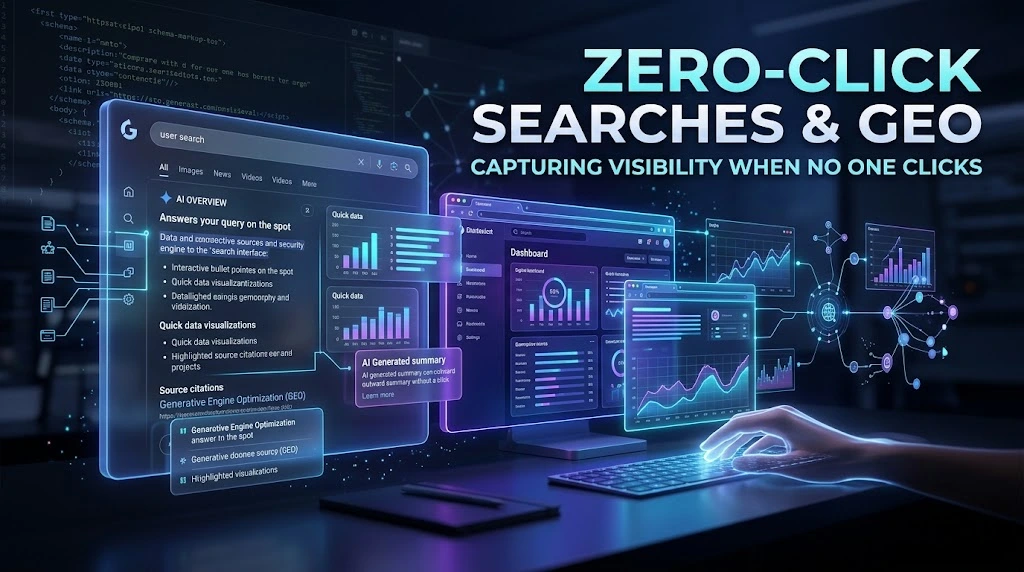
Today, Google and other major search engines don’t just point users toward answers—they present the answer directly on the search engine results page (SERP). Between Google’s AI Overviews (formerly SGE), direct answer cards, knowledge panels, and interactive SERP elements, over half of all web searches now end without a user ever clicking on a link.
Welcome to the era of Zero-Click Searches and Generative Engine Optimization (GEO). If your entire digital strategy relies solely on organic session clicks to prove ROI, it’s time to rethink your approach to content visibility.
The Reality of Zero-Click Searches
A zero-click search occurs when a user’s query is fully satisfied directly on the search results page. The searcher inputs a question, receives an immediate answer, and closes the tab or moves on to another task.
[ Traditional Search Funnel ]
Query ➔ SERP Rank ➔ Click ➔ Pageview ➔ Conversion
[ Generative/Zero-Click Funnel ]
Query ➔ AI Overview / Snippet ➔ Answer Consumed (Brand Impression) ➔ Searcher Exits / Refines
This shift isn’t driven by searcher laziness; it’s driven by convenience and structural changes in search engines:
- AI Overviews & LLM Summaries: Large Language Models synthesize information across multiple web documents to produce a consolidated summary at the very top of the SERP.
- Instant Featured Snippets: Bulleted lists, definitions, and concise steps are extracted directly into position zero.
- Interactive Knowledge Graphs: Data points like specs, pricing, schedules, and definitions are surfaced without requiring page loads.
When search engines transition from search portals into answer engines, traditional traffic metrics drop. However, brand influence doesn’t disappear—it shifts location.
What is Generative Engine Optimization (GEO)?
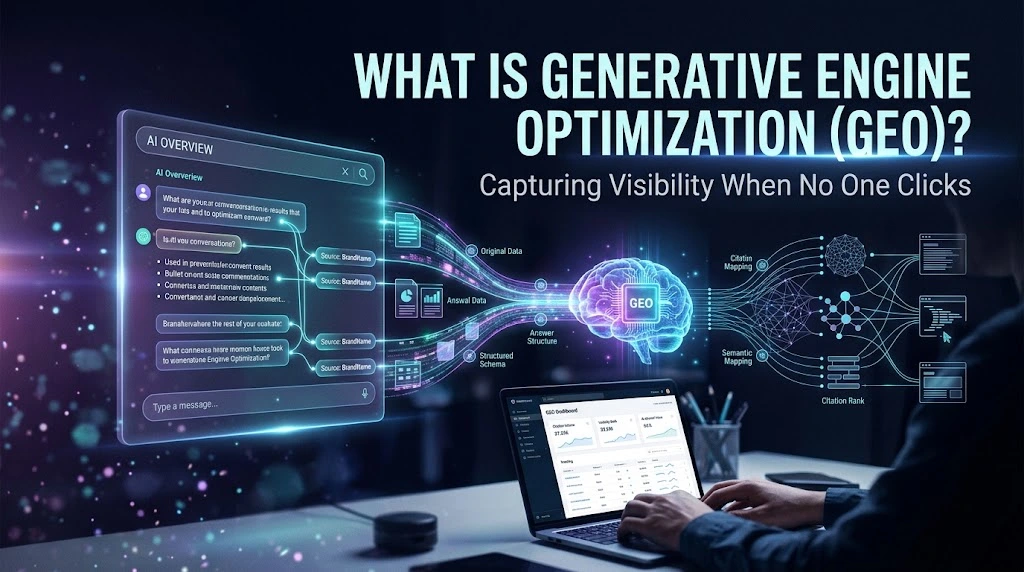
Generative Engine Optimization (GEO) is the discipline of optimizing digital content so that Large Language Models (LLMs) and generative search systems understand, cite, and surface your brand, insights, and data in their synthetic answers.
While traditional SEO focuses on rank-and-click mechanics, GEO focuses on citation, brand inclusion, and semantic authority.
| Traditional SEO | Generative Engine Optimization (GEO) |
| Primary Goal: Drive clicks to target URLs | Primary Goal: Become the source cited in AI responses |
| Key Metric: Organic Traffic, CTR, Keyword Ranking | Key Metric: Citation Frequency, Brand Mentions, Share of Voice |
| Focus: Metadata, Keywords, Backlink Quantity | Focus: Structured Data, Citation-Worthy Data, Technical Site Performance |
| Content Style: Long-form keyword-targeted articles | Content Style: Clear, authoritative statements, direct answers, proprietary facts |
If you want to maintain site performance and brand reach, your technical foundation must also support rapid crawler indexing. For a deeper look at optimizing your technical infrastructure for speed and indexing efficiency, check out our guide on zestwear.pk .
4 Core Strategies to Win at GEO and Zero-Click Search
1. Structure Content with the “Answer Engine” Architecture
Generative models analyze content by scanning for logical relationships, factual clarity, and clear semantic structures. To make your content easily digestible for LLM crawlers:
- Use Direct Answer Blocks: Lead major sections with a crisp 40–60 word answer before diving into deeper nuances or explanations.
- Leverage Exact Schema Markup: Implement schema types (FAQPage, Article, HowTo, Product, Organization) so crawlers don’t have to guess at context.
- Organize with Strict H2/H3 Hierarchy: Treat headers as explicit questions or clear subtopics, followed by structured tables or bulleted points.
2. Publish Original, Non-Synthesizable Data
LLMs easily summarize generic content. If your article merely regurgitates basic information found across 20 other sites, an AI Overview will synthesize it without citing you specifically.
To gain direct citations, focus on publishing content AI cannot invent:
- Original industry studies and survey findings
- Real-world case study data and exact numerical metrics
- Proprietary benchmarks and unique technical testing
When an AI engine needs a specific statistic or source reference to support its generated text, it cites the origin of that unique data point.
3. Optimize for Entity Recognition & Digital Footprint
Generative engines evaluate entities (people, brands, products, concepts) across the entire web, not just on your domain. GEO requires reinforcing your brand’s presence across multiple platforms:
- Ensure consistent entity descriptions across Wikipedia, Wikidata, industry directories, and official brand profiles.
- Gain mentions on trusted third-party publication domains, trade journals, and high-authority industry platforms.
- Align closely with structured web documentation. For example, when structuring technical web schemas or database-level optimizations, referring directly to official documentation like the Schema.org standards ensures your data aligns with established global standards.
4. Shift Metrics from “Clicks” to “Brand Impressions & Influence”
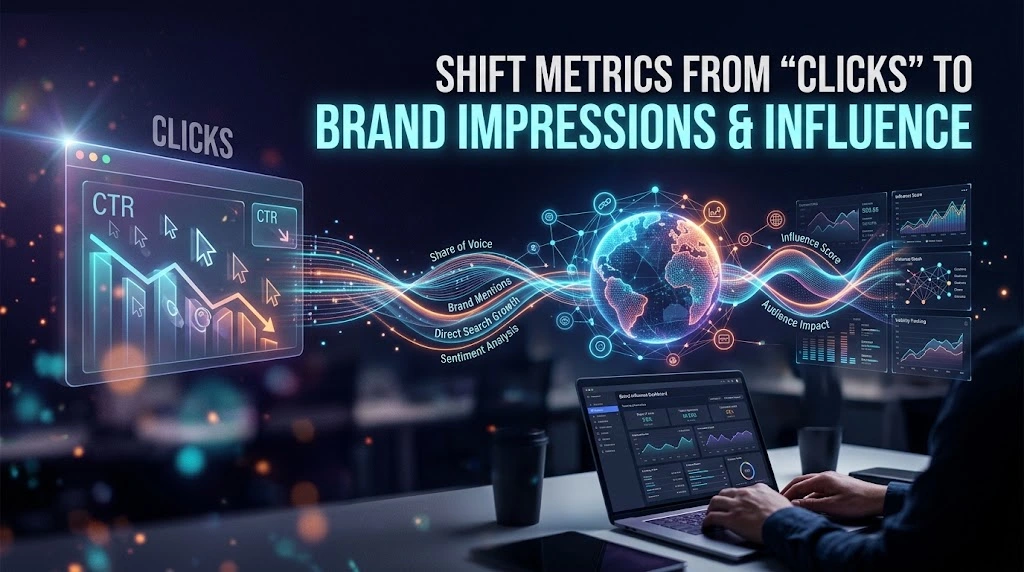
If 60% of search queries in your niche yield zero clicks, evaluating performance strictly on Google Analytics pageviews paints an incomplete picture. Modern search monitoring must track:
- Brand Mentions & Citation Frequency: How often your brand or domain is cited inside AI Overviews for core industry terms.
- Direct & Branded Search Growth: Increases in users searching directly for your brand name after encountering your insights in zero-click snippets.
- Conversion Rate per Organic Visit: Organic traffic volume may shrink, but users who click through after viewing an AI snippet often possess higher intent and convert at a higher rate.
Preparing Your Content Strategy for the Next Era of Search
Zero-click searches and Generative Engine Optimization do not represent the demise of content marketing—they mark its evolution.
When user behavior shifts toward zero-click interactions, thin content designed merely to capture high-volume long-tail keywords loses value. The winning strategy requires producing authoritative, data-backed insights structured cleanly for both human readers and AI crawlers.
By optimizing for generative engines today, you ensure that even when searchers don’t click, your brand remains the definitive answer they see.