
What 2 Years of Off-Page SEO Taught Me About Building Backlinks
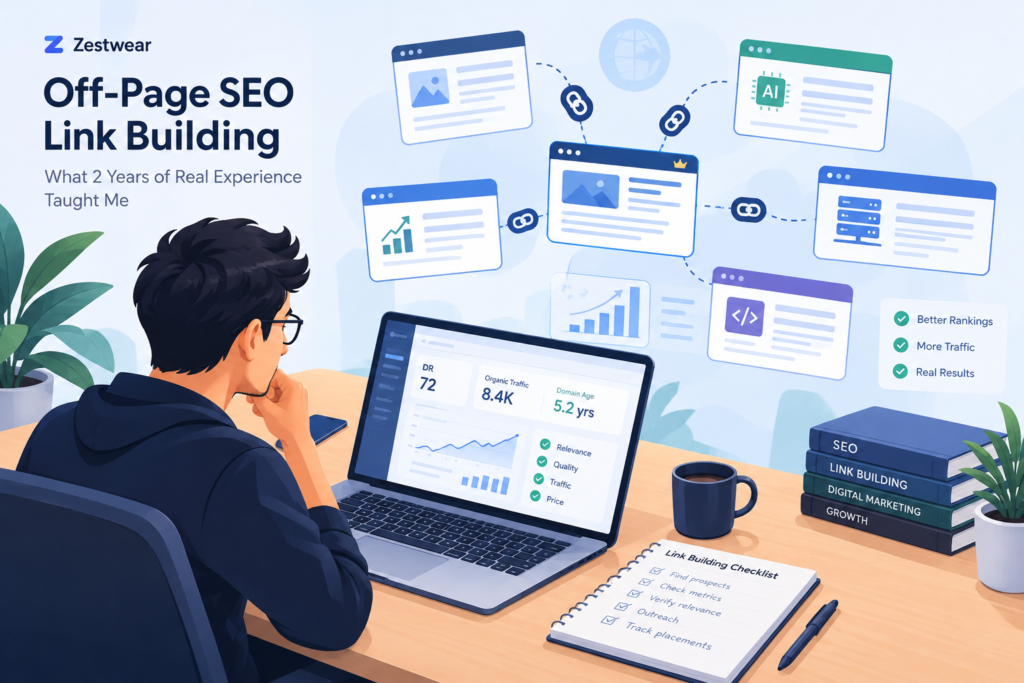
When I first started doing off-page SEO and link building, I thought the job was mostly about finding websites with high DR and getting links from them.
After around two years of doing this work, I’ve learned that it’s much more complicated than that.
I’ve worked on websites in different industries, including finance, server hosting, VPS, and AI, and one thing has stayed consistent: a backlink is only useful when it actually fits the client’s requirements.
A website can have DR 70 and still be a bad prospect. Another website with a lower DR can sometimes be a much better opportunity.
Here’s what I’ve learned from doing the work myself.
How I Find Link-Building Opportunities
My prospecting usually starts with outreach platforms, Slack, websites, and SEO tools.
I also use competitor backlink research when it makes sense for a project. The basic idea is to look at websites that are already linking to competitors and see whether those websites could also be relevant prospects.
For SEO metrics, I mainly look at:
- DR
- Organic traffic
- Domain age
- Niche relevance
- Existing outbound links
- Overall site quality
- Price
- DA and spam signals when the client provides access to Moz
I don’t simply collect websites and send them to a client.
First, I compare the website against the client’s requirements.
For example, I once found a DR 70 website, but its traffic didn’t meet the requirement for a particular client, especially when looking at the traffic from the target country. I ignored it for that project.
Later, I had another client whose requirements matched that website, so I offered it to them and it was accepted.
That experience taught me something important:
A website isn’t automatically good or bad. It depends on what the client actually needs.
High DR Doesn’t Mean High Quality
One of the biggest lessons I’ve learned is not to judge a website by DR alone.
I’ve found websites that looked excellent at first.
The DR was good.
The traffic looked good.
The website looked professional.
But after checking more carefully, I found signs that the traffic and authority had been built through black-hat SEO.
I rejected the site.
This is one of the reasons I don’t think link building should be reduced to finding the highest DR possible.
I look at the whole picture.
If the traffic looks suspicious, the website isn’t relevant, the outbound links look excessive, or something else feels wrong, I would rather reject the opportunity than send it to a client just because the DR looks impressive.
Guest Posts and Link Insertions
I’ve worked with different types of link placements depending on the client’s requirements.
Guest posts can provide an opportunity to create content specifically for a relevant publication, while link insertions involve adding a relevant link to existing content.
For me, the most important part isn’t simply getting the placement.
It’s finding a website where the placement actually makes sense.
The topic, audience, website quality, traffic, relevance, and client requirements all matter.
I also learned this through pricing.
When I was newer to link building, I once paid $150 for a website that I later realized was worth around $80.
At the time, I didn’t understand pricing and negotiation as well as I do now.
That mistake taught me to research the opportunity properly and negotiate instead of immediately accepting the publisher’s first price.
Don’t Assume the Publisher’s First Price Is Final
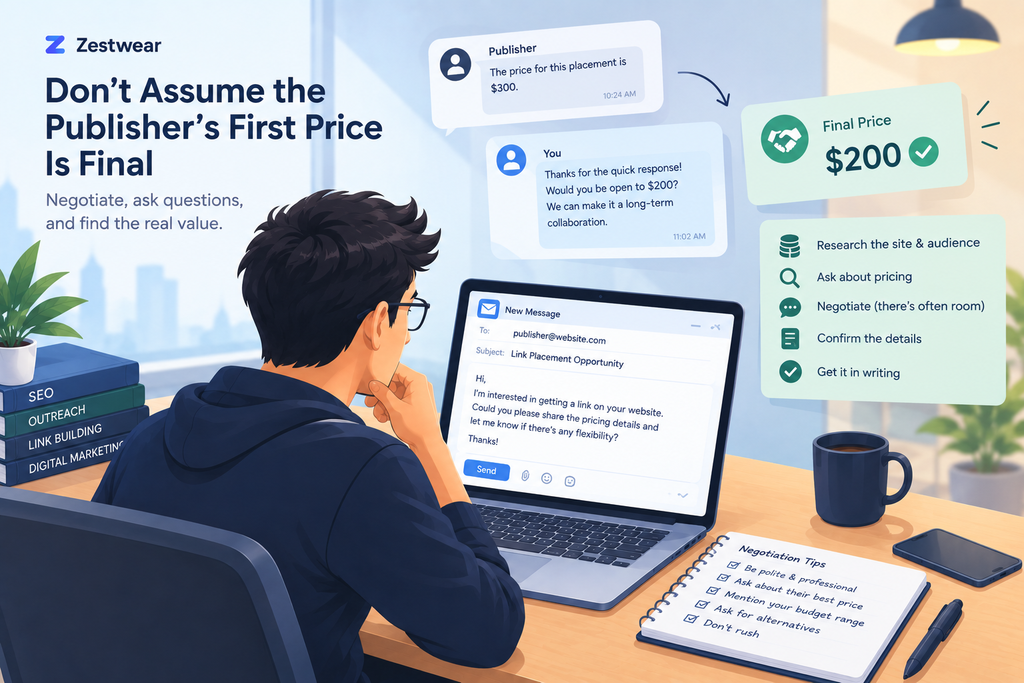
Publisher outreach has taught me another useful lesson: prices can often be negotiated.
From my experience, around 70% of the time there has been some room to bargain, although this obviously depends on the publisher and website.
My approach is usually simple.
I contact the publisher, ask about the opportunity and pricing, and then negotiate if the price doesn’t fit the project.
There isn’t always a need for a complicated sales pitch.
Sometimes a simple and professional message works better.
Of course, some publishers don’t respond at all.
That’s normal.
Not every website owner understands link building, and not everyone is interested in receiving these requests.
You just have to keep prospecting.
What About Niche Edits?
Niche edits or link insertions can be useful when the existing article is genuinely relevant to the target page.
But I don’t think a link should be inserted just because there is an opportunity to do it.
I look at the existing article, its topic, the surrounding content, the website itself, and whether the link would actually make sense to the reader.
If the placement feels forced, I don’t consider it a good opportunity.
What I Learned From Competitor Backlinks
Competitor backlink research is another useful way to discover prospects.
Instead of starting completely from zero, I can look at where competitors are receiving links and investigate whether those websites are relevant to my project.
But I don’t automatically copy every backlink.
A competitor may have links from websites that don’t meet my client’s requirements.
So competitor research is a prospecting method, not a guarantee that every discovered website is worth pursuing.
What About Forums and Community Links?
Not every backlink needs to come from a high-DR publication.
Forums and communities can sometimes be useful for visibility, discussion, referral traffic, and discovering relevant audiences.
But I wouldn’t build a strategy around dropping links everywhere just to increase backlink numbers.
If a community doesn’t allow promotional links, I don’t try to force one in.
For me, relevance and usefulness come first.
Finding the Right Contact
Once I find a website that fits the requirements, I need to find someone to contact.
Sometimes the contact information is available directly on the website.
Sometimes I use email-finding tools such as Hunter when the client provides credits.
I also use business email and other contacts depending on the project.
The goal is simple: reach the person who can actually discuss the placement.
How I Track Everything
I don’t rely on memory.
Depending on the project, I use Google Sheets or software that I’ve worked on/developed myself to track prospects and placements.
The tracker can include things such as:
- Website
- DR
- Traffic
- Relevance
- Contact information
- Price
- Outreach status
- Response
- Placement status
- Target URL
- Notes
A good tracking system becomes especially important when you’re dealing with a large number of prospects.
My Biggest Beginner Mistake
The biggest mistake I made wasn’t choosing the wrong SEO tool.
It wasn’t finding the wrong website.
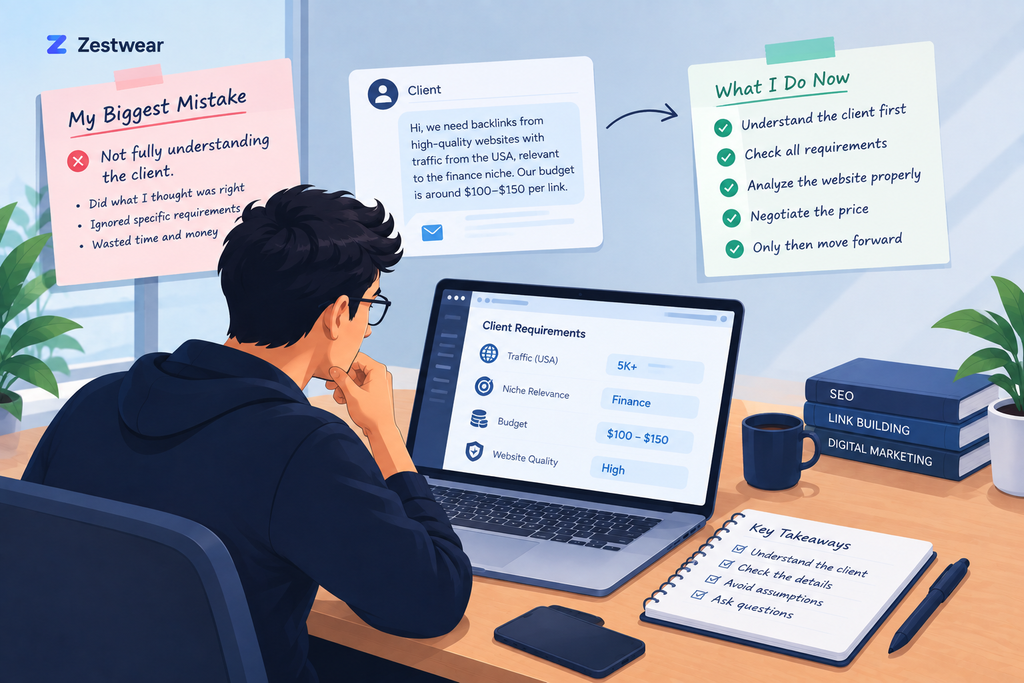
It was not fully understanding the client.
When I was starting out, sometimes I would do what I personally thought was right instead of making sure I completely understood what the client actually wanted.
Looking back, that’s probably the worst mistake I made.
A client might want traffic from a particular country.
Another client might care more about niche relevance.
Another might have a specific budget.
Another might have strict requirements around website quality.
The same website can be perfect for one client and completely useless for another.
That’s why I now try to understand the client first and prospect second.
What I Would Tell Myself on Day One
If I could go back to my first day of link building, I’d tell myself:
Don’t chase DR. Understand the client. Check the website properly. Learn to negotiate. And don’t assume you’re always right.
That would have saved me a lot of time and money.
I’ve learned to pay attention to red flags instead of ignoring them.
I’ve learned that a high number doesn’t automatically mean high quality.
And I’ve learned that asking questions is better than making assumptions.
What Makes a Good Backlink?
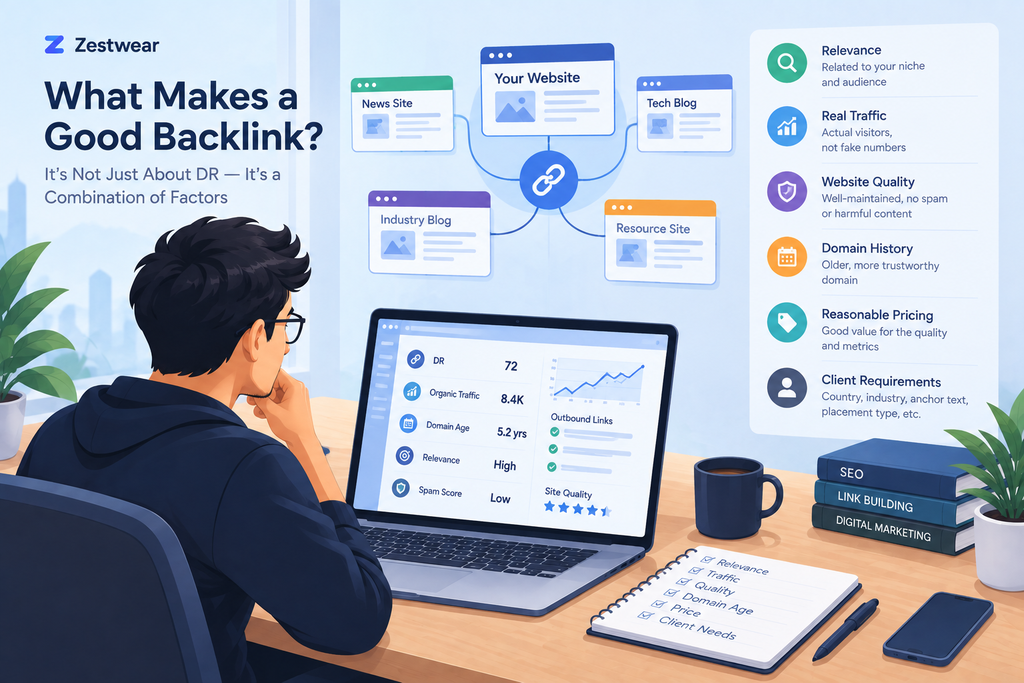
After two years of doing this work, I don’t define a good backlink by one metric.
For me, it’s a combination of factors:
Relevance + real traffic + website quality + domain history + reasonable pricing + client requirements.
DR can be useful.
Traffic can be useful.
DA can be useful when available.
Spam signals can be useful.
But none of them should be looked at in isolation.
The most important question I ask is:
Does this website actually make sense for this client?
If the answer is no, a high DR won’t change that.
Final Thoughts
Link building looks simple from the outside.
Find a website.
Contact them.
Get a link.
But after doing it for two years, I’ve realized that the real work happens before the link is placed.
It’s researching websites, understanding clients, checking traffic, identifying suspicious sites, negotiating prices, finding the right contacts, tracking opportunities, and knowing when to walk away.
I’ve made mistakes along the way.
I paid too much for placements. I ignored red flags. I didn’t always understand the client properly.
But those mistakes taught me more than simply reading about link building ever could.
And that’s probably the biggest lesson I’ve learned:
Good link building isn’t about getting the most links. It’s about making better decisions about which opportunities are actually worth pursuing.