

What Makes an E-commerce Website Look Professional and Trustworthy?

In today’s digital world, online shopping has become an essential part of everyday life. From clothing and electronics to everyday essentials, people can purchase almost anything without leaving their homes. However, with countless online stores competing for attention, deciding which ones are worth trusting can be challenging.
A professional e-commerce website is more than just an attractive design or a collection of products. It is about creating a smooth, reliable, and transparent shopping experience that makes customers feel confident about their purchases. From the homepage to the checkout process, every detail contributes to how visitors perceive an online business.
In my opinion, a well-organized homepage creates the first impression, but what truly builds trust is the overall shopping experience. A website may look impressive at first glance, but its real value becomes clear when customers start exploring products, reading reviews, and eventually receiving their orders.
The Importance of a Well-Organized Homepage For E-commerce

The homepage is often the first thing visitors see when they enter an online store. It acts as the digital storefront of a business, introducing its products, services, and overall identity. A confusing or poorly organized homepage can discourage visitors from exploring further, regardless of how good the products might be.
A professional homepage should have a clean layout, clear navigation, and well-arranged product categories. Visitors should be able to understand what the business offers without wasting time searching through unnecessary pages. Attractive visuals, readable text, and a properly structured menu also contribute to a better first impression.
Personally, when I visit an online store for the first time, I pay close attention to how its homepage is organized. If everything is presented clearly and I can easily find what I am looking for, I naturally feel more comfortable exploring the website.
However, a visually appealing homepage is only the starting point. A truly professional website must maintain the same level of quality throughout the entire shopping journey.
Customer Reviews: A Key Factor in Building Trust
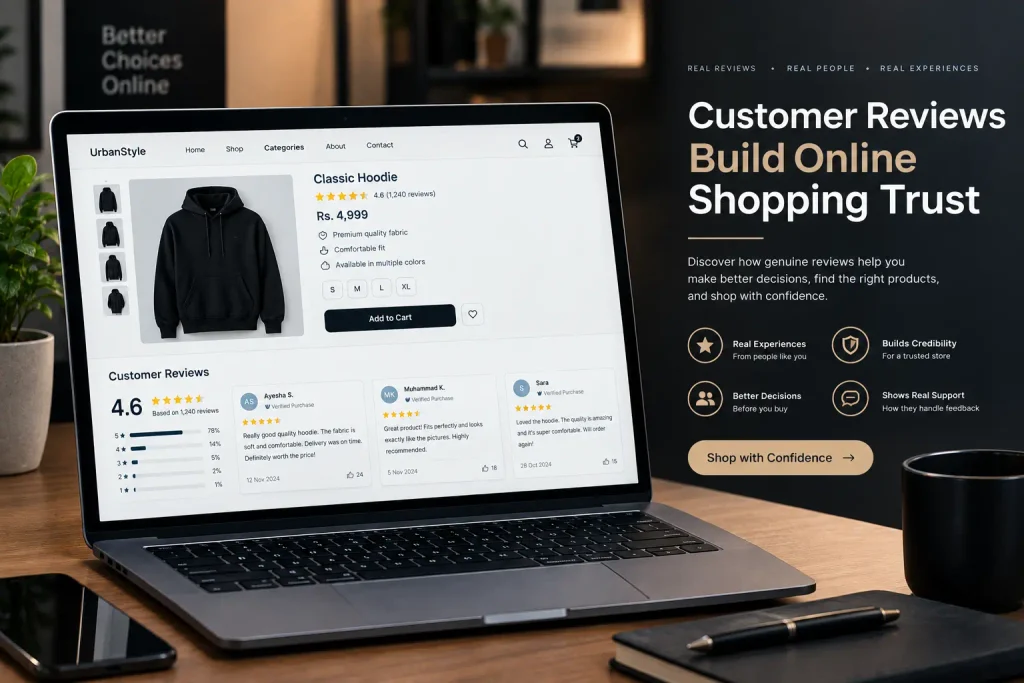
Customer reviews play a significant role in influencing online purchasing decisions. Since shoppers cannot physically examine products before ordering, they often depend on the experiences of previous buyers to understand what they can expect.
In my opinion, customer reviews are among the most important factors when deciding whether to trust an online store. They offer a better understanding of product quality, delivery experiences, sizing accuracy, and customer service. A product might look perfect in photographs, but genuine customer feedback can reveal details that are not immediately visible.
For online businesses, displaying authentic reviews and responding professionally to customer complaints can make a meaningful difference. Positive reviews can increase confidence, while thoughtful responses to negative feedback demonstrate accountability and a willingness to improve.
However, customers should also be careful when evaluating reviews. Repeated comments, suspiciously perfect ratings, or feedback that lacks specific details may not always provide a reliable picture of a product or business.
Ultimately, honest customer feedback helps shoppers make informed decisions and gives businesses an opportunity to establish credibility.
Product Quality Should Match Customer Expectations To Get Good Customer Reviews
One of the biggest challenges of online shopping is the uncertainty surrounding product quality. Customers rely on photographs, descriptions, and specifications to decide whether an item is worth purchasing. When the delivered product does not match those expectations, the entire shopping experience can become disappointing.
I once ordered football jerseys from a website. Everything seemed to go smoothly until I opened the package. The size was incorrect, and the quality was not what the website had promised. This experience made me realize that a smooth ordering process does not necessarily guarantee a satisfying purchase.
For this reason, online businesses should provide accurate product descriptions, high-quality photographs, detailed size charts, and honest information about the materials and features of their products.
Businesses should also avoid exaggerated claims that create unrealistic expectations. If a product has certain limitations, communicating them honestly is better than misleading customers just to secure a sale.
When customers receive exactly what they were promised, they are more likely to feel satisfied and develop confidence in the business. Product quality is therefore not just about the item itself; it is also about keeping the promises made on the website.
Payment Options and the Confidence to Purchase
Payment methods can strongly influence a customer’s willingness to place an order. While some shoppers prefer digital payments for convenience, others feel more comfortable paying when their package arrives.
Cash on delivery (COD) is particularly important for customers who are unfamiliar with an online store or hesitant to pay in advance. It allows them to place an order without making an immediate online payment.
Personally, I become hesitant about purchasing from a website that does not offer cash on delivery. However, the absence of this option does not automatically make a store unreliable. Secure payment gateways, transparent payment procedures, and clear order confirmations can also help establish confidence.
An online store should clearly display its available payment methods, explain any additional charges, and provide a secure checkout experience. Customers should never feel uncertain about where their money is going or whether their payment information is protected.
Offering suitable payment options is not simply a matter of convenience. It is an important part of making online shopping accessible and reassuring for different types of customers.
Clear Policies Make Shopping More Transparent
A professional e-commerce website should clearly explain what customers can expect before and after placing an order. Shipping charges, delivery estimates, return conditions, exchange procedures, and refund policies should be easy to find and understand.
Imagine ordering a product that arrives in the wrong size or differs significantly from its online description. Without a clear return or exchange policy, resolving the issue can become frustrating.
Transparent policies help prevent misunderstandings and give customers a better understanding of how a business handles problems. They also demonstrate that the company has considered the needs of its customers rather than focusing exclusively on completing sales.
Businesses should avoid hiding important conditions in complicated language or placing essential information where visitors are unlikely to find it.
A clear and accessible policy section may not be the most visually exciting part of a website, but it can make a significant difference in how trustworthy a business appears.
Simple Navigation and a Smooth Shopping Experience
A professional online store should make shopping feel effortless. Visitors should be able to browse products, compare options, add items to their carts, and complete purchases without unnecessary complications.
Poor navigation, slow-loading pages, broken links, and complicated checkout forms can quickly turn a convenient shopping experience into a frustrating one.
To make the process easier, online stores should focus on clear product categories, useful search and filtering options, visible shopping carts, and straightforward checkout procedures.
Mobile responsiveness is equally important. Many customers browse and purchase products using smartphones, so websites must adapt to different screen sizes. Small buttons, crowded layouts, and difficult-to-read text can discourage mobile users from completing their orders.
A simple and responsive design does not just make a website look better. It saves customers time, reduces frustration, and allows them to focus on finding the products they need.
Accessible Customer Support Creates Reliability
Even the most carefully designed online store cannot anticipate every customer question or problem. Visitors may need assistance with product details, order tracking, payment issues, or delivery arrangements.
Providing accessible customer support helps customers feel that a real business is available to assist them. A dedicated contact page, business email address, phone number, or messaging option can make communication easier.
However, simply displaying contact information is not enough. Businesses should also aim to respond politely, provide accurate information, and handle complaints professionally.
When a problem cannot be resolved immediately, keeping customers informed is far better than leaving them without an explanation.
Good customer service can turn a disappointing situation into an opportunity to demonstrate responsibility. The way a business handles problems can leave a lasting impression, sometimes even more than the original purchase itself.
Website Security and Customer Privacy
Online shopping involves sharing personal information, including names, addresses, phone numbers, and sometimes payment details. Protecting this information is an essential responsibility for every e-commerce business.
A professional website should use HTTPS, reliable payment providers, updated software, and appropriate security practices. It should also have a clear privacy policy explaining how customer information is collected, used, and protected.
Customers should be able to recognize that the business takes their privacy seriously. At the same time, shoppers should remain cautious about suspicious links, unusual payment requests, and websites that ask for unnecessary personal information.
It is important to remember that a secure connection alone does not prove that a business is legitimate. Security measures, transparent information, genuine customer feedback, and consistent service all contribute to a more trustworthy shopping experience.
Common Mistakes That Make an Online Store Look Unprofessional
Even businesses with good products can lose customer confidence because of avoidable website problems. Small details that might seem unimportant to the business owner can have a noticeable effect on visitors.
Some common mistakes include:
- Poor-quality product photographs that make items difficult to evaluate.
- Incorrect or incomplete product descriptions that create confusion.
- Hidden delivery charges that surprise customers during checkout.
- Fake or misleading reviews that damage credibility.
- Missing contact information that makes businesses difficult to reach.
- Unclear return and refund policies that create uncertainty.
- Broken links and complicated navigation that interrupt the shopping process.
- Poor mobile design that makes browsing inconvenient.
Most of these issues can be improved without a large investment. Careful planning, regular website maintenance, and attention to customer feedback can help businesses create a more professional online presence.
A successful website does not have to be complicated or expensive. What matters most is whether it serves its visitors effectively and communicates information honestly.
Why Customer Trust Matters More Than Short-Term Profit
For anyone starting an online store, one of the most valuable lessons is that building customer trust should come before chasing immediate profits.
In my opinion, businesses should be willing to prioritize customer satisfaction even when doing so means earning less in the short term. Fair exchanges, honest product descriptions, reliable service, and responsible complaint handling may require additional effort and expense, but they help establish a stronger relationship with customers.
This does not mean ignoring business costs or operating without a sustainable financial plan. Instead, it means recognizing that long-term success depends on more than individual transactions.
A customer who receives a product as promised and has a positive shopping experience may return in the future or recommend the store to others. On the other hand, a single disappointing purchase can damage confidence and discourage future orders.
Trust is built gradually through consistent actions. Businesses that respect their customers’ expectations have a better foundation for developing lasting relationships and sustainable growth.
Final Thoughts
Creating a professional and trustworthy e-commerce website requires more than attractive visuals or modern design. It involves combining a well-organized homepage, genuine customer reviews, reliable products, convenient payment options, transparent policies, and dependable customer service.
From my perspective, an organized homepage creates the first impression, while customer reviews play a major role in deciding whether an online store deserves my trust. My own experience with receiving football jerseys that did not match the promised size and quality also reinforced the importance of delivering what a business advertises.
For online store owners, the goal should not simply be to attract visitors or increase sales. It should be to provide an experience that makes customers feel confident about their decisions.
Ultimately, a truly professional e-commerce website is one that keeps its promises, respects its customers, and understands that trust is not created through design alone. It is earned through every interaction, from the first visit to the moment a customer receives their order.