
How to Start an E-commerce Business: Complete Guide
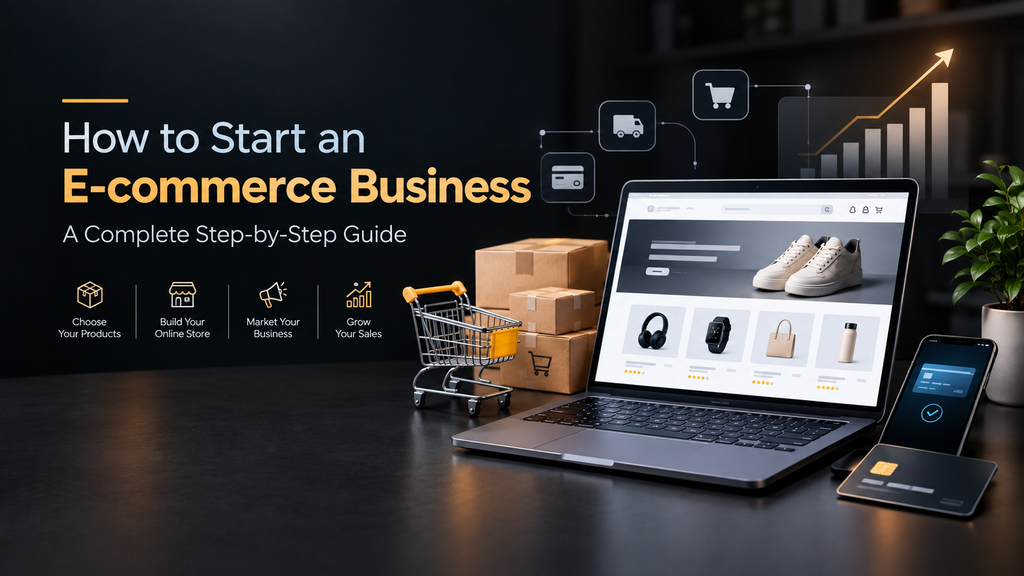
E-commerce has transformed the way businesses sell products and connect with customers. With an online store, businesses can reach customers beyond their local market, operate around the clock, and build a brand without the limitations of a traditional storefront.
However, launching a successful e-commerce business involves much more than putting products online. From selecting the right products and understanding your target audience to building a professional website and developing an effective marketing strategy, every stage requires careful planning.
This guide walks you through the essential steps to start an e-commerce business and build a strong foundation for long-term growth.
1. Choose a Profitable E-commerce Business Idea
Every successful online store starts with a clear business idea.
Begin by identifying a product or category that has genuine market demand. Look for opportunities where customers have a specific need, problem, or preference that your business can address.
When evaluating a product idea, consider:
- Existing customer demand
- Competition within the market
- Potential profit margins
- Product quality and availability
- Shipping and storage requirements
- Opportunities to differentiate your brand
- Potential for repeat purchases
Avoid choosing products solely because they are trending. A sustainable business is generally built around consistent demand and a clearly defined customer need.
2. Understand Your Target Audience
Knowing exactly who you are selling to is one of the most important parts of starting an e-commerce business.
Use SEO Tools to Track Search Performance
Along with your website analytics, use reliable SEO tools to monitor keyword rankings, discover new search opportunities, analyze competitors, and identify ways to improve your website’s visibility in search engines. Regular SEO tracking can help you understand which pages are attracting organic traffic and where further optimization is needed.
Create a clear picture of your ideal customer by considering:
- Age and general demographics
- Location
- Interests and preferences
- Purchasing habits
- Common problems or needs
- Preferred price range
- Where they discover products online
Understanding your audience allows you to make better decisions about your products, pricing, website design, content, and marketing.
Research Your Competitors
Competitor research can also reveal valuable opportunities.
Study similar online stores and examine their:
- Product range
- Pricing
- Website experience
- Product descriptions
- Customer reviews
- Delivery options
- Marketing strategies
- Strengths and weaknesses
The objective is not to copy competitors. Instead, identify areas where your business can provide a more useful product, better experience, stronger value, or clearer communication.
3. Select the Right E-commerce Business Model
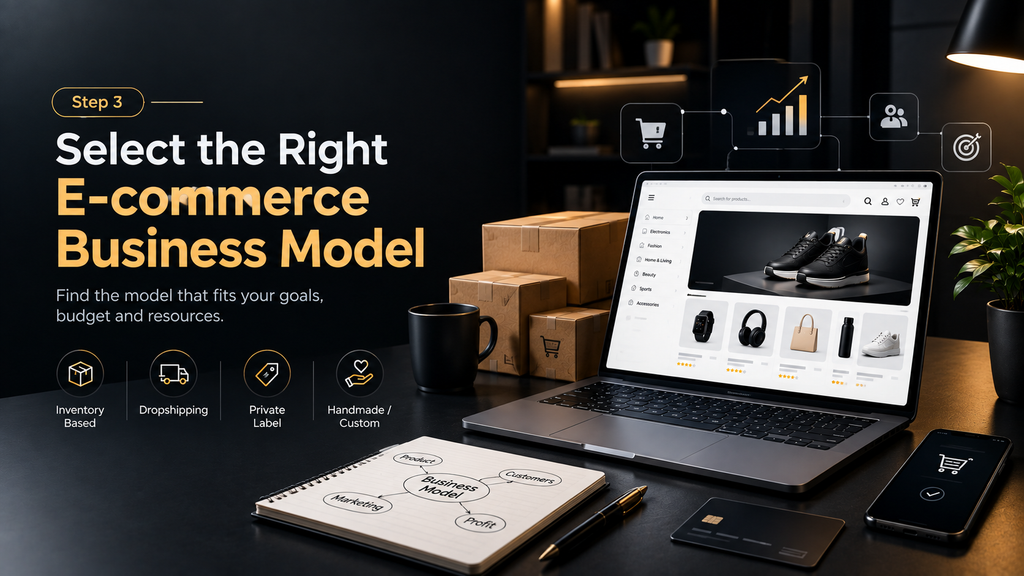
There are several ways to operate an online business. Choosing the right model depends on your budget, products, experience, and growth plans.
Traditional Inventory Model
You purchase products from manufacturers or wholesalers and store the inventory yourself.
Advantages:
- Greater control over product quality
- Faster order fulfillment
- Better control over packaging and branding
Considerations:
- Requires upfront investment
- Requires storage space
- Unsold inventory can create financial risk
Dropshipping
With dropshipping, you sell products without holding inventory. When a customer places an order, the supplier fulfills and ships it.
Advantages:
- Lower initial investment
- No need for extensive inventory storage
- Easier to test different products
Considerations:
- Less control over fulfillment
- Supplier reliability becomes critical
- Profit margins may be lower
Private Label
Private-label businesses source products from manufacturers and sell them under their own brand.
This approach can help businesses create a distinctive identity, establish customer loyalty, and develop products specifically for their target market.
Handmade or Custom Products
If you create unique or personalized products, an online store can provide a direct channel to customers.
This model can help differentiate your business but may require more time and resources per order.
Choose the model that aligns with your available resources and long-term objectives.
4. Find Reliable Suppliers
Your supplier can directly affect your product quality, delivery times, customer satisfaction, and profitability.
Before choosing a supplier, evaluate:
- Product quality
- Wholesale prices
- Minimum order quantities
- Production capacity
- Shipping options
- Delivery times
- Return policies
- Communication and support
- Ability to handle increasing order volumes
Whenever possible, order product samples before placing a large order. Testing the product yourself can reveal quality, packaging, and delivery issues before they affect customers.
5. Calculate Your Costs and Set the Right Prices
Pricing should be based on your complete business costs—not simply the supplier’s price.
Consider expenses such as:
- Product cost
- Packaging
- Shipping
- Payment processing fees
- Website and software expenses
- Advertising
- Taxes and applicable fees
- Returns and refunds
- Customer service
- Storage and fulfillment
A basic calculation is:
Selling Price − Total Cost = Gross Profit
Your pricing should cover your costs while leaving enough margin to support marketing, operations, unexpected expenses, and future growth.
6. Choose a Business Name and Domain
Your business name is an important part of your brand identity.
Choose a name that is:
- Easy to remember
- Simple to spell
- Easy to pronounce
- Relevant to your brand
- Flexible enough to support future growth
Before finalizing the name, check the availability of the relevant domain and social media usernames. Also research existing businesses and trademarks to reduce the risk of brand confusion or legal issues.
7. Build a Professional E-commerce Website
Your online store is often the first major interaction customers have with your business.
A professional e-commerce website should provide a smooth experience from the moment visitors arrive until they complete their purchase.
Essential elements include:
- Professional homepage
- Clear product categories
- Search functionality
- Detailed product pages
- High-quality product images
- Shopping cart
- Simple checkout
- Secure payment options
- Shipping information
- Return and refund policies
- Contact information
- Privacy and relevant legal pages
Your website should also be responsive and easy to use on smartphones, tablets, and desktop computers.
8. Create High-Converting Product Pages
A product page should answer the customer’s most important questions before they make a purchase.
Include:
- Clear product title
- Detailed but easy-to-read description
- Key features
- Customer benefits
- Product specifications
- Available sizes, colors, or variations
- Price
- Shipping information
- Return information
- High-quality images
Whenever appropriate, use multiple product images to show different angles, details, dimensions, or real-world use.
Focus your copy on how the product benefits the customer, rather than simply listing technical features.
9. Set Up Secure Payment Methods
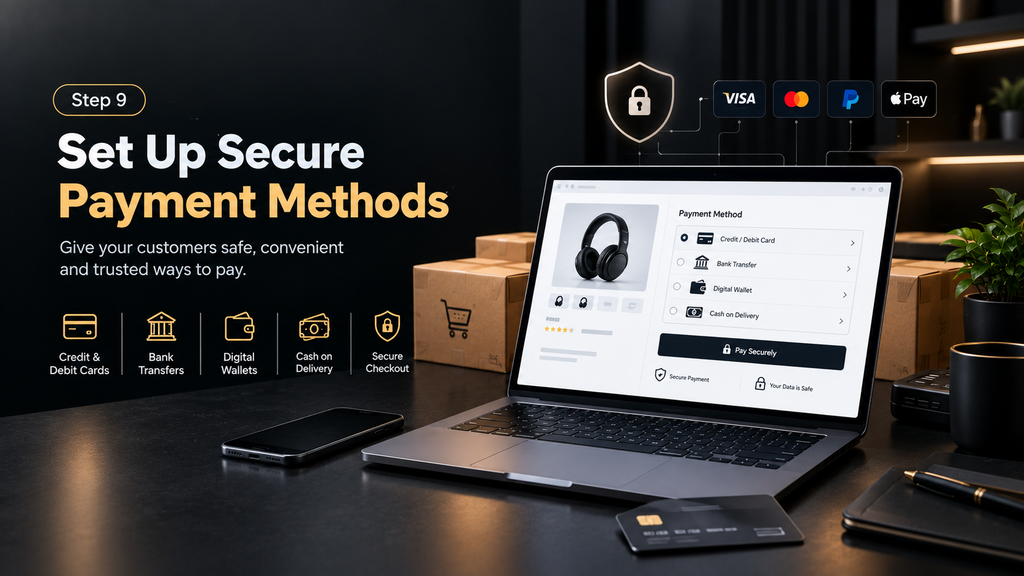
Customers need convenient and trustworthy ways to pay.
Depending on your target market, payment options may include:
- Credit and debit cards
- Bank transfers
- Digital wallets
- Cash on delivery
- Other supported payment services
Use reputable payment providers and ensure your checkout process follows appropriate security practices.
Customers should always be able to see the total cost of their order before completing payment.
10. Create a Reliable Shipping and Fulfillment Process
Shipping is a major part of the customer experience.
Before launching, determine:
- Where you will deliver
- Shipping costs
- Expected delivery times
- Packaging requirements
- Order tracking options
- Return procedures
- Handling of damaged or missing orders
Display shipping information clearly on your website.
Most importantly, provide realistic delivery estimates. Consistently meeting your stated delivery times helps establish customer confidence.
11. Develop an E-commerce Marketing Strategy
Building an online store is only the beginning. You also need a plan to bring relevant visitors to it.
Search Engine Optimization
SEO can help your products and content appear in search results when potential customers are looking for relevant information or products.
Optimize your:
- Product pages
- Category pages
- Website structure
- Page titles
- Meta descriptions
- URLs
- Images
- Educational content
Create useful content around questions and topics your target customers are actively searching for.
Social Media Marketing
Choose social platforms that are relevant to your audience.
Instead of only posting promotional content, consider sharing:
- Product demonstrations
- Educational content
- Customer experiences
- Tutorials
- Behind-the-scenes content
- New product announcements
Paid Advertising
Paid advertising can help you reach potential customers quickly. Start with a controlled budget, test different campaigns, and monitor the results before increasing spending.
Email Marketing
Email marketing can help turn one-time visitors into returning customers.
Use email to share:
- New products
- Special offers
- Helpful content
- Order updates
- Personalized recommendations
Content Marketing
Helpful guides, tutorials, product comparisons, and educational articles can attract potential customers while establishing your business as a useful source of information.
12. Build Trust With Your Customers
Trust is essential in e-commerce because customers cannot physically examine a product before purchasing it.
Build credibility through:
- Accurate product descriptions
- High-quality images
- Transparent pricing
- Clear shipping policies
- Straightforward return policies
- Secure payment options
- Responsive customer support
- Genuine customer reviews
- Consistent branding
Avoid exaggerated or misleading claims. A trustworthy customer experience can contribute to repeat purchases and long-term brand growth.
13. Test Your Store Before Launching
Before announcing your store publicly, test the entire customer journey.
Check that:
- Every page loads correctly
- Navigation works properly
- Product information is accurate
- Images display correctly
- Products can be added to the cart
- Checkout works
- Payments process correctly
- Confirmation emails are delivered
- Shipping charges are calculated correctly
- Contact forms work
- The website works properly on mobile devices
- Important links and policies are accessible
Place test orders yourself or ask someone unfamiliar with the website to complete a purchase. A fresh perspective can reveal problems you may have overlooked.
14. Launch With a Focused Strategy
You don’t need thousands of products or a massive marketing budget to launch.
Start with a focused product selection and a clearly defined target audience.
A smaller launch allows you to:
- Test customer demand
- Collect feedback
- Identify website problems
- Improve your products
- Refine your marketing
- Understand customer behavior
Use the early stages of your business as an opportunity to learn and improve.
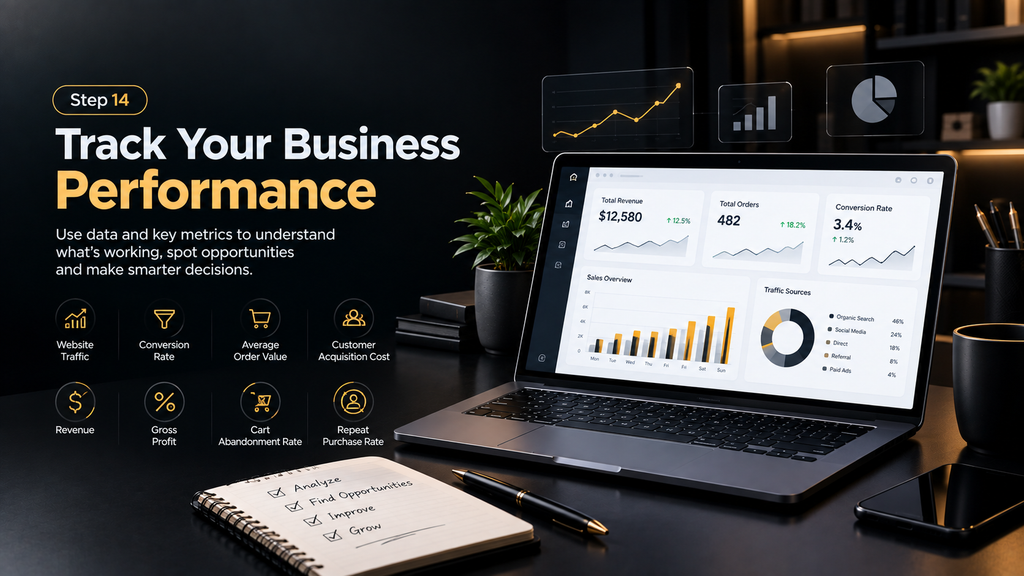
15. Measure Your E-commerce Performance
Once your store is operating, track important performance indicators.
Key metrics include:
- Website traffic
- Conversion rate
- Revenue
- Gross profit
- Average order value
- Customer acquisition cost
- Cart abandonment rate
- Repeat purchase rate
- Return rate
For example, if your website receives substantial traffic but generates few sales, investigate whether customers are experiencing problems with pricing, product information, website usability, trust, or checkout.
Data can help you identify where improvements will have the greatest impact.
16. Improve and Scale Your Business
Successful e-commerce businesses continuously improve.
As you gain experience and customer data, look for opportunities to improve:
- Product selection
- Product quality
- Website performance
- Customer service
- Shipping
- Conversion rates
- Marketing campaigns
- Customer retention
- Inventory management
Once you have a reliable foundation, you can consider expanding your product range, entering new markets, developing private-label products, or investing more heavily in marketing channels that generate measurable results.
The goal is not simply to increase sales. Sustainable growth requires maintaining healthy margins, customer satisfaction, and reliable operations as order volume increases.
Common E-commerce Mistakes to Avoid
1. Choosing Products Without Research
Don’t invest heavily in products without first understanding demand, competition, and customer needs.
2. Underestimating Operating Costs
Remember to account for shipping, advertising, payment fees, packaging, returns, and other expenses.
3. Neglecting Website Performance
A slow, confusing, or difficult-to-navigate website can create unnecessary barriers to purchase.
4. Using Poor Product Images
Customers rely heavily on product visuals when shopping online. Use clear and accurate images that represent the product honestly.
5. Making Checkout Complicated
Keep the checkout process simple and provide customers with clear information at every stage.
6. Ignoring Customer Feedback
Customer questions, reviews, complaints, and suggestions can reveal valuable opportunities for improvement.
7. Depending Entirely on One Marketing Channel
Building traffic from multiple appropriate channels can reduce dependence on a single source of customers.
E-commerce Business Launch Checklist
Before launching your online store, make sure you have:
- A clear product or niche
- A defined target audience
- Competitor research
- A suitable business model
- Reliable suppliers
- Tested product samples
- A complete cost and pricing strategy
- A business name and domain
- A professional e-commerce website
- High-quality product images
- Optimized product descriptions
- Secure payment methods
- Shipping and fulfillment procedures
- Return and refund policies
- Customer support process
- SEO strategy
- Marketing plan
- Website analytics
- Complete checkout testing
- Mobile optimization
Final Thoughts
Starting an e-commerce business requires more than creating an online store. It requires a clear understanding of your customers, a suitable business model, reliable products, careful financial planning, and a website designed around the customer experience.
Start with a focused idea, validate your market, control your costs, and build a professional online presence. Once your store is live, use customer feedback and performance data to continuously improve your products, website, marketing, and operations.
With the right foundation and a consistent approach, an e-commerce business can develop from a small online store into a sustainable and scalable brand.