

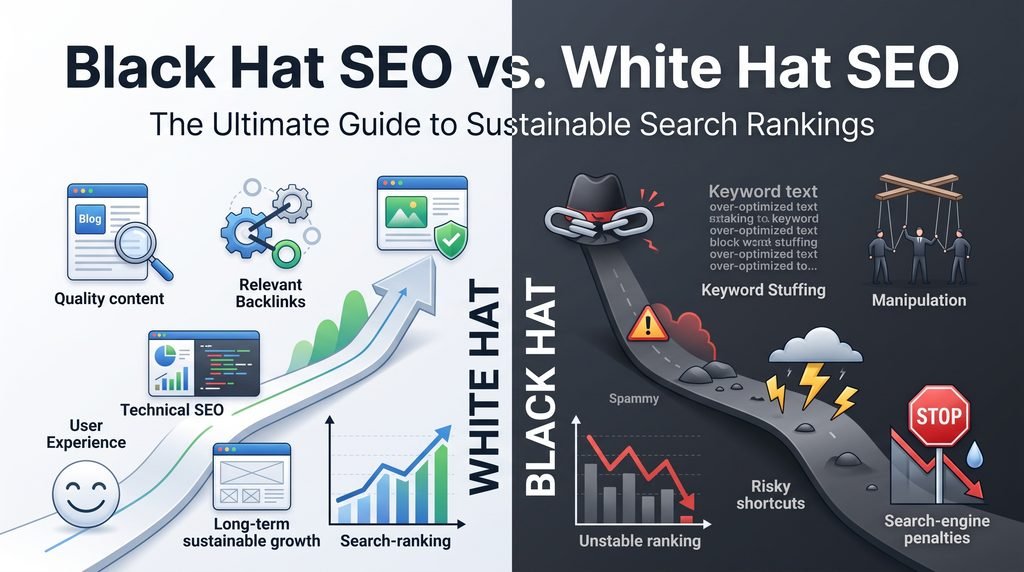
Black Hat SEO vs. White Hat SEO: The Ultimate Guide to Sustainable Search Rankings
When you start digging into Search Engine Optimization (SEO), you quickly realize there are two fundamentally different ways to approach organic search traffic: you can build a site that search engines want to reward, or you can try to trick the algorithm into giving you quick rankings.
In digital marketing, these approaches are known as White Hat SEO and Black Hat SEO.
Whether you are optimizing an e-commerce store, scaling content on ZestWear, or trying to qualify for program monetizations like Google AdSense, understanding the difference between these two strategies is the single most important decision you will make for your website’s survival.
Here is a full breakdown of Black Hat vs. White Hat SEO, their pros and cons, and my top tips for building long-term search visibility.
What is White Hat SEO?
White Hat SEO refers to optimization techniques that strictly align with search engine guidelines, specifically Google’s Search Essentials. The ultimate goal of a white hat strategy is to deliver real value to real human readers while making it easy for search engine crawlers to understand and index your pages.
Core White Hat Tactics:
- User Intent & Helpful Content: Crafting in-depth, original articles that answer specific search queries based on Google’s E-E-A-T framework (Experience, Expertise, Authoritativeness, and Trustworthiness). For a comprehensive breakdown of search fundamentals, resources like Moz’s Beginner’s Guide to SEO offer valuable foundational insights.
- Strategic Keyword Optimization: Researching primary and long-tail keywords and integrating them naturally into headings, titles, and body text without overusing them.
- Technical & On-Page SEO: Improving page loading speed (Core Web Vitals), ensuring mobile-first responsiveness, writing clear meta descriptions, and setting up clean XML sitemaps.
- Ethical Link Building: Earning high-quality backlinks naturally through guest posting, digital PR, outreach, and creating shareable resource assets.
What is Black Hat SEO?
Black Hat SEO consists of deceptive practices that exploit flaws and loopholes in search engine algorithms to manipulate rankings. These methods focus entirely on gaming search bots, often at the expense of human user experience.
While black hat methods might trigger a sudden spike in search traffic, search engine updates (driven by AI and machine learning) detect these patterns faster than ever.
Common Black Hat Tactics:
- Keyword Stuffing: Overloading web pages with target keywords to force relevance, resulting in unnatural, unreadable content.
- Private Blog Networks (PBNs) & Paid Link Schemes: Buying thousands of low-quality backlink packages or using networks of expired domains solely to pass artificial link equity.
- Cloaking & Sneaky Redirects: Displaying one set of content to Google’s spider bots while redirecting real human visitors to a completely different (often spammy) page.
- Automated & Spun Content: Using low-cost AI spinning tools to generate hundreds of repetitive, low-value articles without human review or added value.
- Hidden Text and Links: Hiding keyword-rich text or links behind images, off-screen, or as white text on a white background.
Black Hat vs. White Hat SEO: Side-by-Side Comparison
| Feature | White Hat SEO | Black Hat SEO |
| Search Engine Guidelines | Adheres strictly to guidelines | Deliberately violates guidelines |
| Primary Audience | Human visitors first, search bots second | Search engine bots only |
| Ranking Speed | Gradual, steady, and sustainable growth | Rapid initial spikes followed by sudden crashes |
| Risk Factor | Minimal risk of manual actions or algorithmic drops | Extreme risk of penalty or complete de-indexing |
| Compounding Value | Builds a long-term brand asset and domain authority | Short-lived “churn and burn” site strategy |
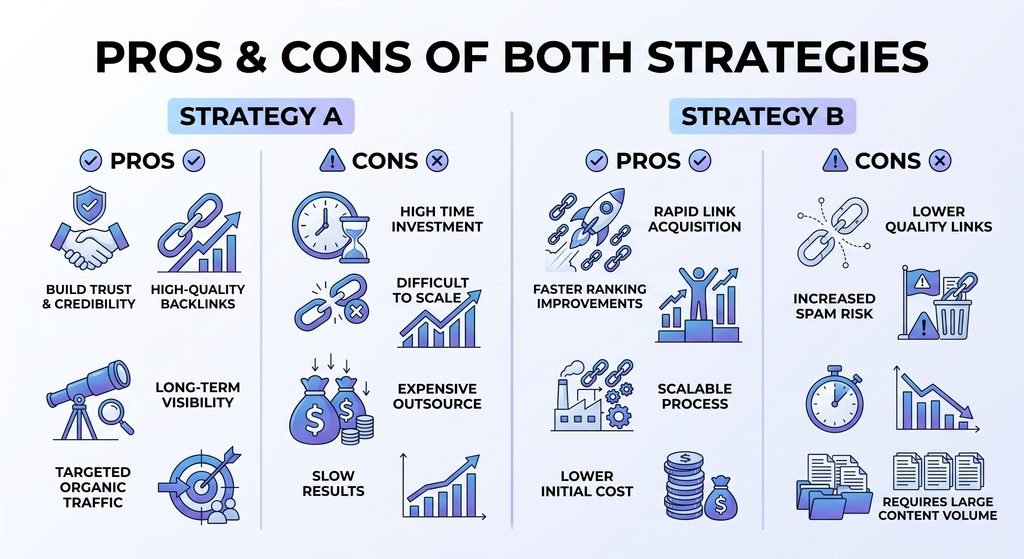
Pros and Cons of Both Strategies
White Hat SEO
Pros:
- Sustainable ROI: Once your pages rank organically, they continue bringing in passive organic traffic for months or years.
- Algorithm-Proof: Google core updates typically reward ethical sites while penalizing manipulative ones.
- Higher Conversion Rates: Content created for real humans builds trust, leading to better engagement, sales, and AdSense approval rates.
Cons:
- Takes Time: It can take weeks or months to see substantial ranking movement, especially for newer domains.
- Requires Consistent Effort: High-quality research, content writing, technical maintenance, and genuine link outreach demand dedicated work.
Black Hat SEO
Pros:
- Fast Results: Can generate quick surges in rankings and traffic before algorithms flag the domain.
- Low Initial Effort: Automated tools and bought link lists require less strategic writing and research.
Cons:
- Heavy Penalties: A single Google algorithmic update or manual review can strip all rankings or permanently remove your site from search indexes.
- Reputation Damage: Poor content quality and deceptive redirects frustrate users and ruin brand trust.
- Wasted Resources: When a black hat site gets hit, all the time and money spent building it disappears overnight.
SEO Tips & Tricks for Ranking Safely
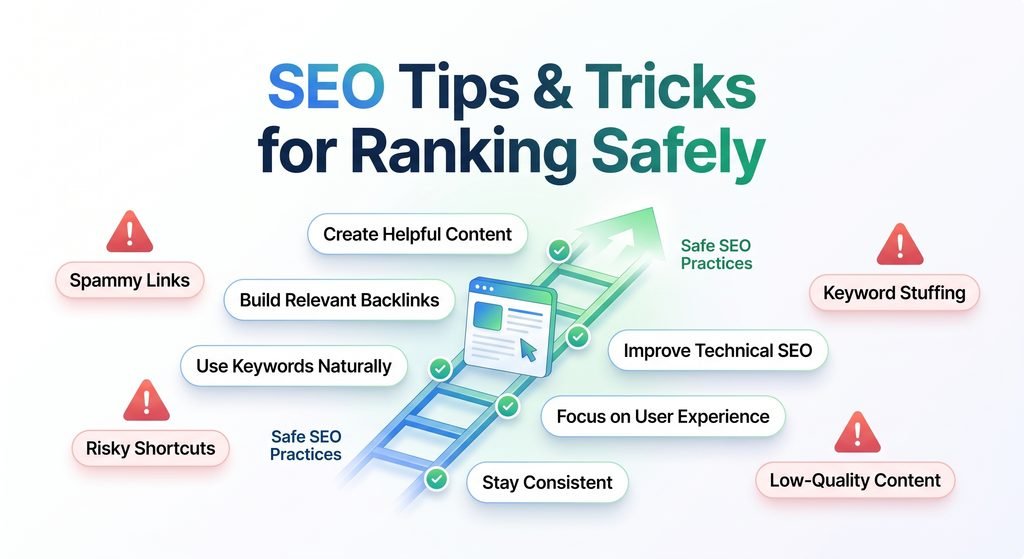
If you want to master SEO and grow stable, long-term traffic, focus on these actionable tips:
- Target Search Intent, Not Just Single Keywords:
Instead of repeating a keyword five times per paragraph, focus on what the user wants to accomplish. Combine primary keywords with contextual LSI (Latent Semantic Indexing) terms and clear subheadings (H2, H3). - Build Topic Clusters with Internal Links:
Group your articles into topical categories. Create a main guide (a pillar page) and connect it to detailed supporting posts using descriptive anchor text. This builds strong topical authority in the eyes of search engines. - Treat AI as a Co-Pilot, Not an Auto-Pilot:
Using AI tools for brainstorming, research, or outlining is a great productivity booster. However, always add personal insights, real-world examples, and human editing to keep content original and compliant with Google’s helpful content guidelines. - Optimize for Core Web Vitals:
Make sure your site loads fast. Compress large images, minimize heavy JavaScript scripts, and choose clean, lightweight site themes to keep bounce rates low. - Focus on Quality Backlinks Over Quantity:
One backlink from an established, niche-relevant publication will do more for your site’s domain authority than 1,000 spammy directory links. Focus on value-driven outreach, guest blogging, and creating original research data that others naturally want to cite.
Final Thoughts
In SEO, taking shortcuts might look appealing when you’re eager for quick traffic, but black hat tactics are a high-risk gamble that rarely pays off in the long run. Modern search engine algorithms are simply too smart to be tricked for long.
Investing in a clean, user-focused White Hat SEO strategy ensures your website builds lasting authority, withstands future algorithm changes, and delivers reliable organic growth for years to come.